Endovascular Recanalization & Stenting – a minimally invasive option to restore blood flow and help save the limb.
Endovascular treatment for diabetic foot improves blood flow, supports wound healing, and reduces amputation risk without open surgery.

No open incisions; most patients avoid general anaesthesia.

Revascularization helps healing and lowers major amputation risk.
Shorter hospital stay and quicker return to daily activities.
Angioplasty, stents, and other tech chosen per disease pattern.
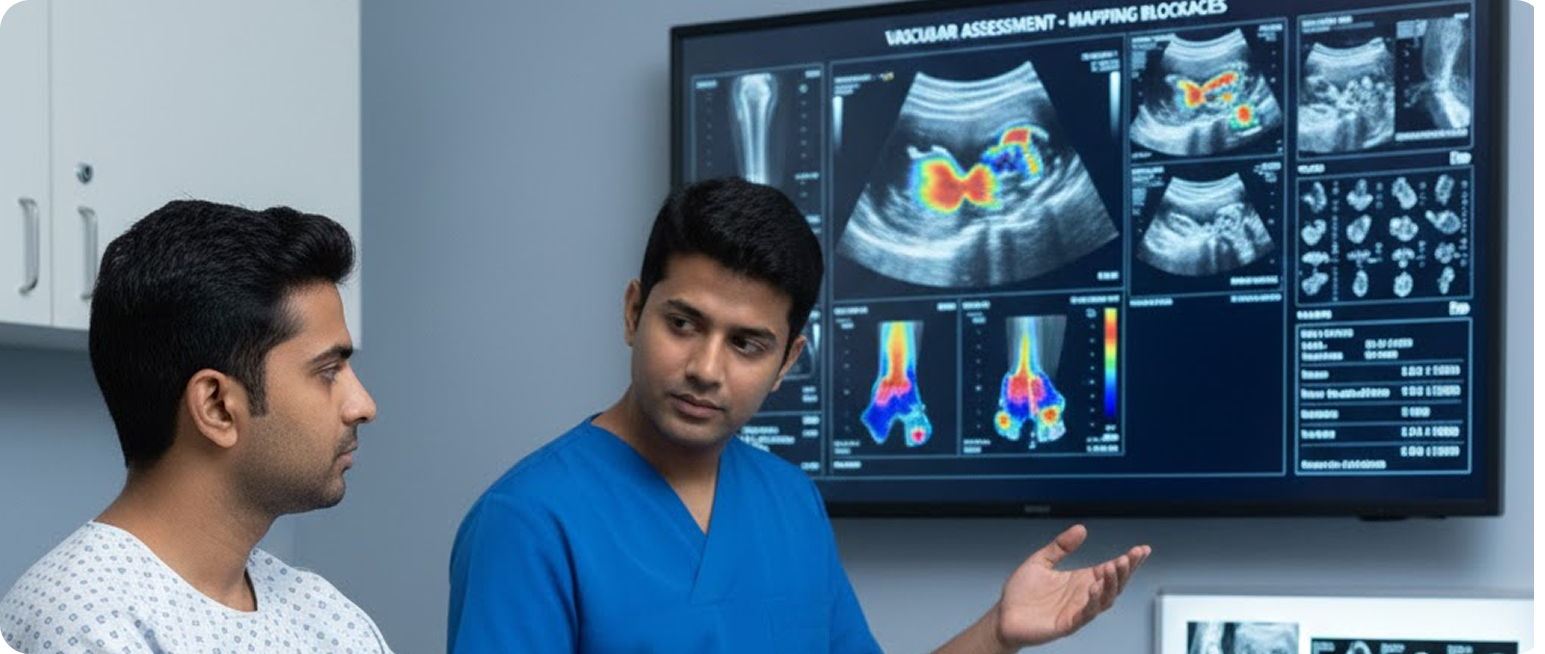
Understanding each step helps you feel more confident and prepared.
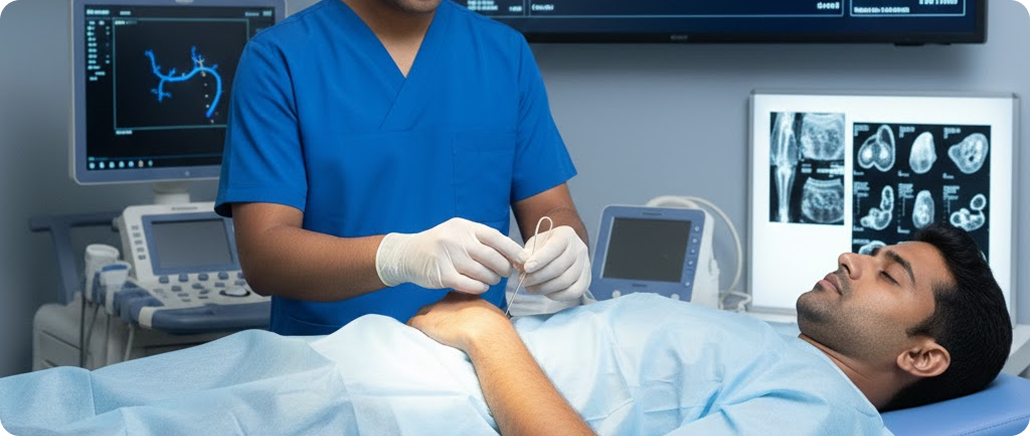
We assess pulses, wounds, and symptoms, and review non-invasive tests such as Doppler ultrasound, CT/MR angiography or previous angiograms to map the blockages.

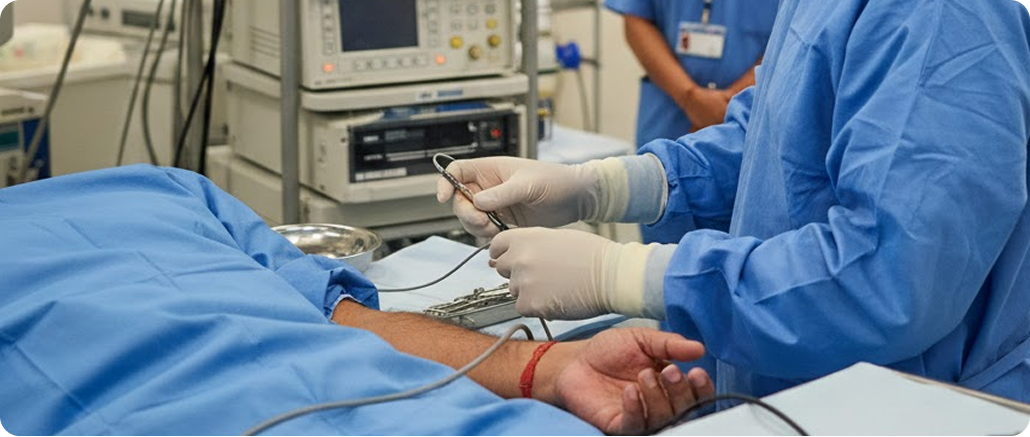
Under local anaesthesia, a thin catheter is inserted through a small puncture in the groin or sometimes at the ankle. No surgical cuts, no stitches.

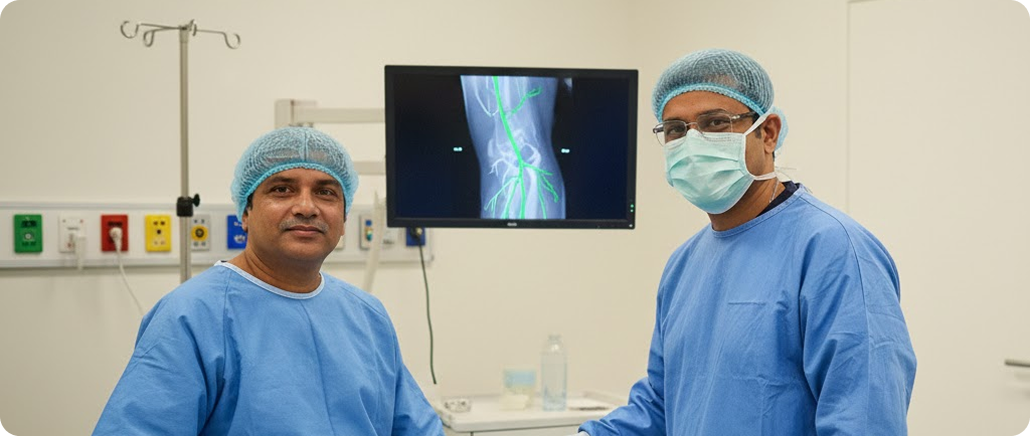
Contrast dye is injected and real-time X-ray imaging (digital subtraction angiography) is used to see the narrowed and blocked arteries supplying the foot.

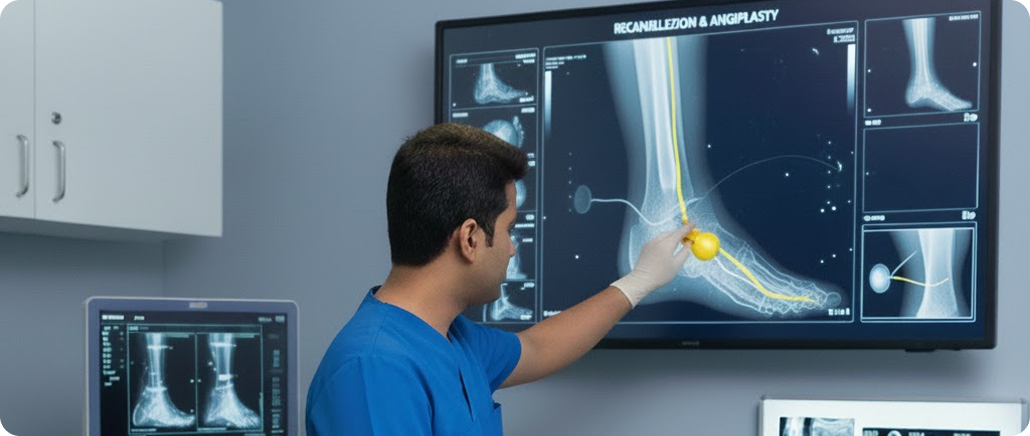
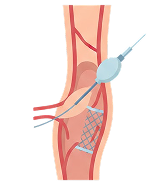
Using fine wires and catheters, the blocked segments are carefully crossed (“recanalized”). A small balloon is then inflated to widen the artery and restore blood flow (balloon angioplasty).

In some areas, especially if the artery recoils or dissects after ballooning, a stent (tiny metal scaffold) is placed to help keep the vessel open. Drug-coated balloons or stents may be used depending on the segment and disease pattern.

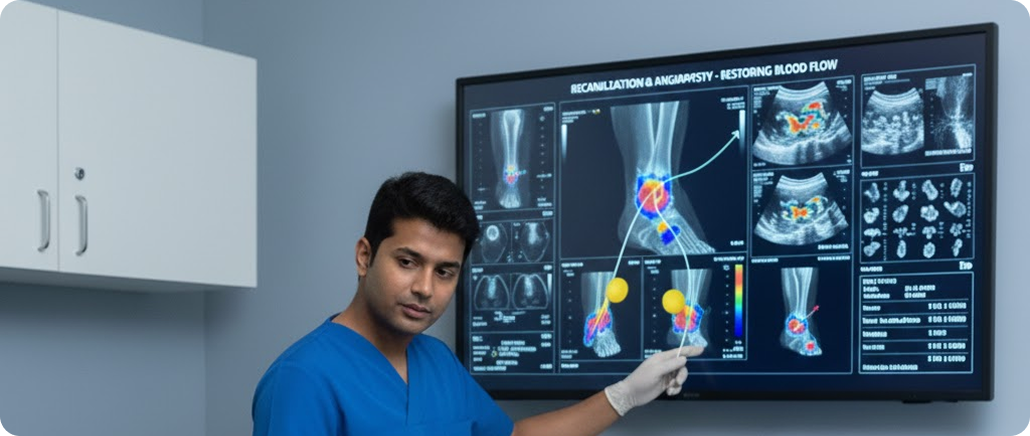
The final angiogram confirms improved blood supply to the foot and, when possible, direct flow to the wound area. Most patients can sit up and walk soon after the procedure and usually go home the same day or after an overnight stay, depending on their condition.

You should speak to a specialist urgently if you have diabetes and:
Ulcers or cuts on the foot that don't heal despite dressings or antibiotics.
Colour change, coldness, or dry gangrene.
Pain even when you're not walking, often worse when lying down.
Needing to stop frequently due to calf, thigh, or buttock pain.
Why Patients Choose NoSurgeries
NoSurgeries offers advanced non-surgical treatments for conditions often managed with surgery.
Using Interventional Radiology, our minimally invasive procedures help reduce surgical risk, recovery time, and hospital stay while delivering effective outcomes.
Diabetic Foot: No surgeries for diabetic foot complications through endovascular recanalization and stenting, improving blood flow and aiding wound healing.
Science-led. Patient-focused. Proven outcomes

Advanced treatments that avoid conventional surgery.

Needle-based procedures with precision imaging.

Fewer complications compared to surgery.

Return to daily life sooner.

Often day-care or minimal admission.

Clear guidance to help you choose confidently.
Talk to our interventional radiology team to find out if endovascular treatment is an option for you.
See how endovascular treatment fits alongside other options for diabetic foot with blocked arteries.

Minimally invasive, pinhole access, usually local anaesthesia; restores blood flow through balloon angioplasty with or without stents.

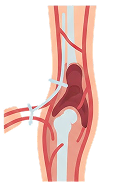
Open operation using a vein or graft to route blood around long blockages. More invasive, longer recovery, but still important for selected patients.

Dressings, antibiotics and off-loading without restoring blood flow. In severe ischaemia, this often fails to heal the ulcer and amputation risk remains high.

Removal of part of the leg when tissue loss is extensive or revascularization is not possible or appropriate.
| Treatment | Endovascular Recanalization & Stenting | Bypass Surgery | No Revascularization | Primary Amputation |
|---|---|---|---|---|
| Procedure Type | Minimally invasive, catheter-based | Open surgical operation | Conservative only | Surgical removal of affected part of the foot/leg |
| Anaesthesia | Local ± light sedation | Regional or general | Not applicable | Regional or general |
| Scars / Sutures | Tiny skin puncture, no stitches | Surgical incision(s) | None | Surgical incision at level of amputation |
| Hospital Stay | Day-care or 1–2 days | Several days | Depends on wound | Usually several days to weeks depending on recovery |
| Recovery | Usually several days to weeks depending on recovery | Longer recovery | Ongoing wound burden | Variable; depends on healing and prosthetic fitting |
| Repeat Procedures | Sometimes needed | Less frequent but larger surgery | Often progression to major amputation | May need further revision surgery or higher-level amputation |
| Goal | Restore blood flow to heal wounds & avoid amputation | Restore blood flow long-term | Symptom/wound management only | Remove dead/infected tissue when limb salvage is no longer possible |
Watch this short video to understand how we open blocked leg arteries and what to expect on the day of your procedure.
Simple explanation of the procedure
Animation of how embolization works
Hear from our experts in interventional radiology
Our expert doctors provide personalized, non-surgical care with a patient-first approach, guiding you to safe and effective treatments.
Real stories from real patients —
see how Medagg's care made a real difference.
Get Expert Guidance And Clarity On The Best Non-Surgical Treatments Tailored To You.
Our Care Custodian Will Call You Once You Share Your Details
The Care Custodian Will Understand Your Problem In Detail
The Right Solution To Your Query Will Be Addressed With Suitable Options
Consultation Will Be Fixed On Your Behalf
Got Questions? Find Quick Answers About Our Treatments And Patient Support.
This procedure is performed by an Interventional Radiologist, a doctor trained in minimally invasive, image-guided treatments.